 Petguardian
Pet Cat That Wasn't: Bolivian Family's "Kitten" Turns Out to Be a New Wild Cat Species
Wildlife·October 2, 2026
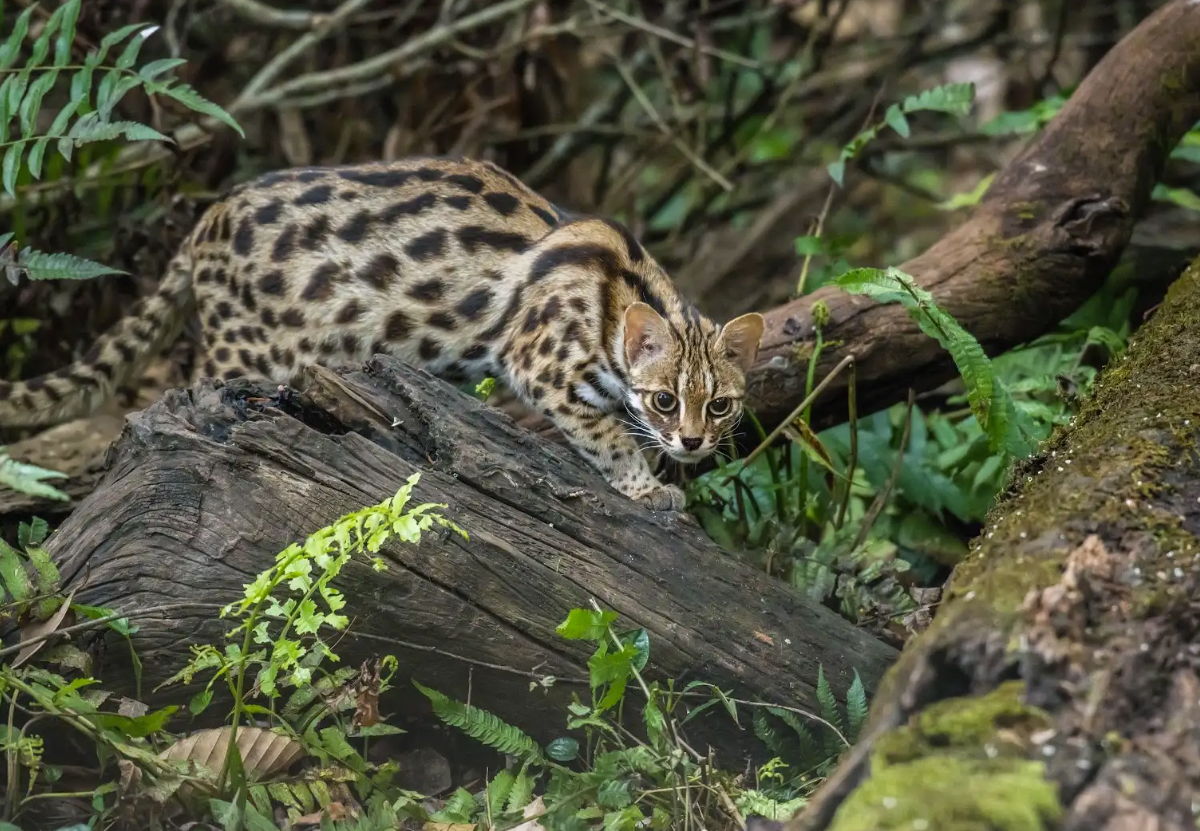
For more than a hundred years, the list of wild cat species stayed essentially fixed. Now it has grown by one, and the story starts with a family who believed they had found a stray kitten.
The animal in question is Leopardus tilcayo, a newly recognized tiger cat from the Yungas forests of Bolivia. A local family took in a small spotted cat and kept it for about a year, assuming it was a domestic pet. As it grew, its wild behavior became hard to ignore, and the family handed it over to the Senda Verde Animal Refuge.
There, biologist Paola Nogales-Ascarrunz noticed that the cat did not quite look like anything she knew. The male, now about 10 years old, is smaller than a typical house cat and slender, with leopard-like spots, short rounded ears and long whiskers. It is the only known individual living at the refuge.
That unusual animal prompted a closer look at the genetics. Researchers analyzed whole-genome data from 38 individuals, including museum specimens, and found that what had long been treated as a single group of tiger cats actually contains five distinct species. By their estimate, the tilcayo lineage split from the other tiger cats roughly 1.4 million years ago.
Reports on the work note that the cat was never a secret to people in the region. Local communities have known it for generations, and the species name honors the word they have always used for it.
For animal care readers, the episode is a useful reminder of how easily a wild animal can pass for a pet. A small spotted cat with a gentle early temperament can look like a domestic kitten, but wild cats grow into animals with very different needs and instincts. Sanctuaries such as Senda Verde often end up as the safety net when those mismatches surface, and in this case the staff's sharp eye is what led to a scientific milestone.
Conservationists will now turn to a harder question. A species with so few confirmed records has an unknown population size and range, and formal recognition is usually the first step toward protection. Some coverage of the research suggests further cat species could be split out of existing groups as more genomic work is done.
Sources: Northeastern University, Mongabay, ZME Science, EarthSky.
Reporting based on an external source.